
Best Time to Visit Seoul, South Korea: A Month-by-Month Guide
October brings Seoul's mildest weather: 15–22°C, low rain, clear skies. Compare all four seasons by temperature, rainfall, and crowd cost to pick your dates.
The best time to visit Seoul is late September to early November, when daytime highs sit around 15–22°C, humidity drops, and skies stay clear through what climatestotravel.com calls Seoul's mildest transitional period, especially October. Early April to mid-May is the close second choice, for cherry blossoms and similarly mild, dry air.
How we chose these
Ranked by daytime and nighttime temperature, rainfall load, and how much a season disrupts walking-heavy sightseeing like palaces, hiking, and markets. Only months backed by the climate research are ranked; festival-crowd or flight-price claims are included only when tied to a verifiable seasonal pattern. Winter makes the list despite the cold because its dry air and low rainfall are a legitimate, underrated option.
- 1
Autumn (late September–early November)
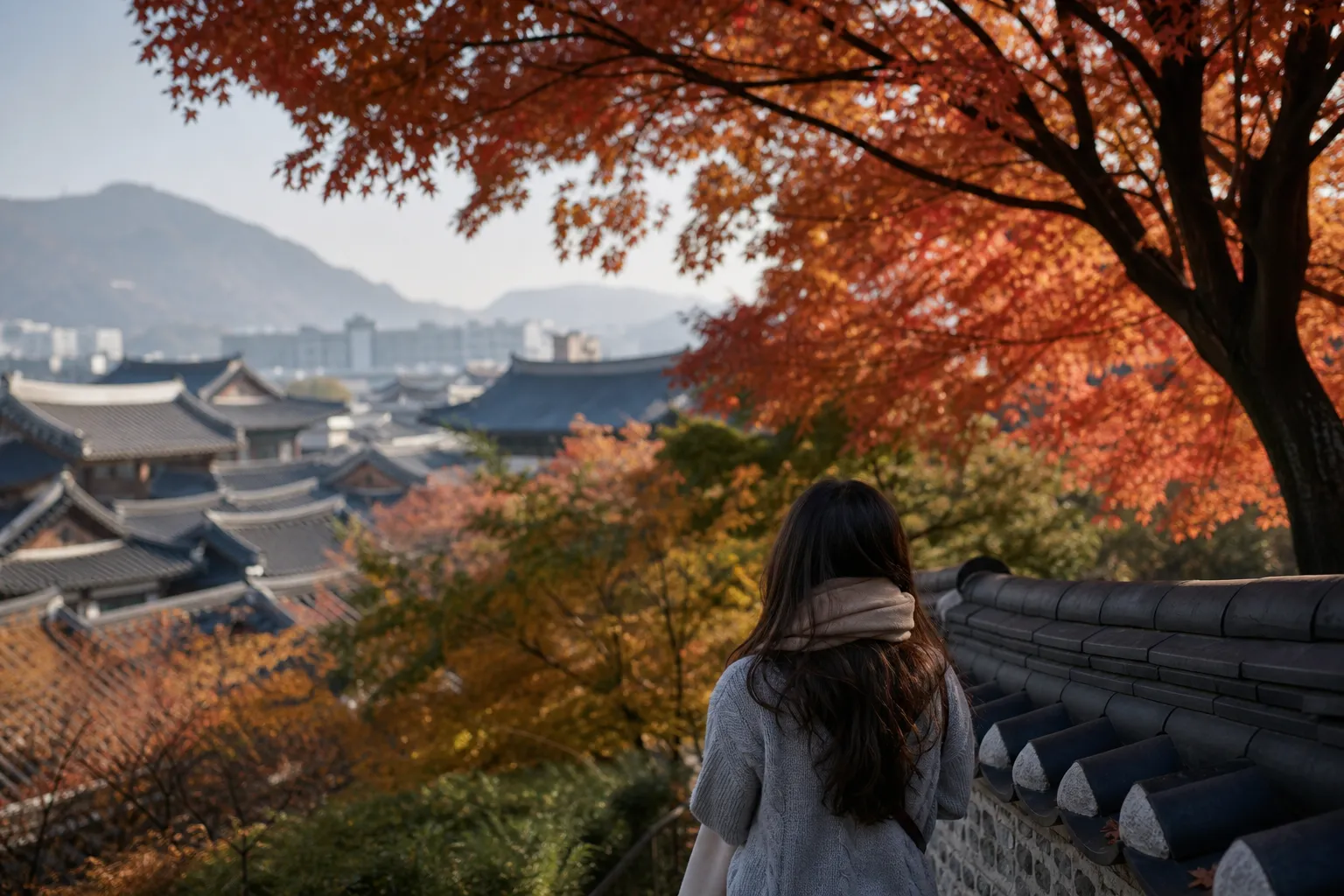
The stretch after summer humidity breaks and before winter cold sets in, with clear skies and foliage color peaking through late October in the hills around the city.
Climatestotravel identifies October specifically as Seoul's mildest month, and this is also the driest extended stretch after summer's monsoon rains taper off. Daytime temperatures typically run 15–22°C, cool enough for walking tours but not jacket weather until November.
- Cost
- No seasonal surcharge; flights and hotels rise around early-to-mid October (Chuseok)
- Hours
- N/A (seasonal window, not a single site)
- Getting there
- N/A
- Booking
- Book flights and hotels 2-3 months ahead if your dates overlap Chuseok, since domestic travel spikes that week
- 2
Spring (early April–mid-May)
The cherry blossom and early-summer transition period, running from blossom season in early-to-mid April through mild, dry weeks into May.
Temperatures climb from cool to comfortably warm without summer's humidity, and rainfall stays relatively low until the monsoon arrives in late June. This is the other true shoulder season, and it draws the heaviest tourist volume of the year around peak blossom dates.
- Cost
- No seasonal surcharge; hotel rates rise noticeably in the first two weeks of April
- Hours
- N/A (seasonal window, not a single site)
- Getting there
- N/A
- Booking
- Blossom timing shifts year to year by roughly a week, so book flexible-date accommodation if the blossoms themselves are the priority
- 3
Winter (December–February)
Seoul's cold, dry season, with January the driest month of the year and average daytime highs around 3°C.
January rainfall averages only about 21mm, the lowest of any month, and skies are frequently clear. Nights average near -7°C in January, but year-to-year variation is significant, so pack layers rather than assuming either extreme.
- Cost
- Lowest hotel and flight prices of the year outside major holidays
- Hours
- N/A (seasonal window, not a single site)
- Getting there
- N/A
- Booking
- Avoid the week around Seollal (Lunar New Year), when domestic transit and many restaurants close or run reduced hours
- 4
Summer (late June–August)
Seoul's hot, humid monsoon season, with August the warmest month of the year and a multi-week rainy spell (jangma) typically running from late June into July.
August daytime highs average around 31°C with lows near 22°C, and WeatherSpark describes the season as long, warm, muggy and wet. The city's urban heat island effect makes evenings noticeably warmer than surrounding countryside, which matters if your itinerary is outdoor-heavy.
- Cost
- Mid-range, aside from the early-to-mid August holiday week
- Hours
- N/A (seasonal window, not a single site)
- Getting there
- N/A
- Booking
- Build in indoor backup plans (museums, markets, malls) for the jangma rainy stretch
Compare at a glance
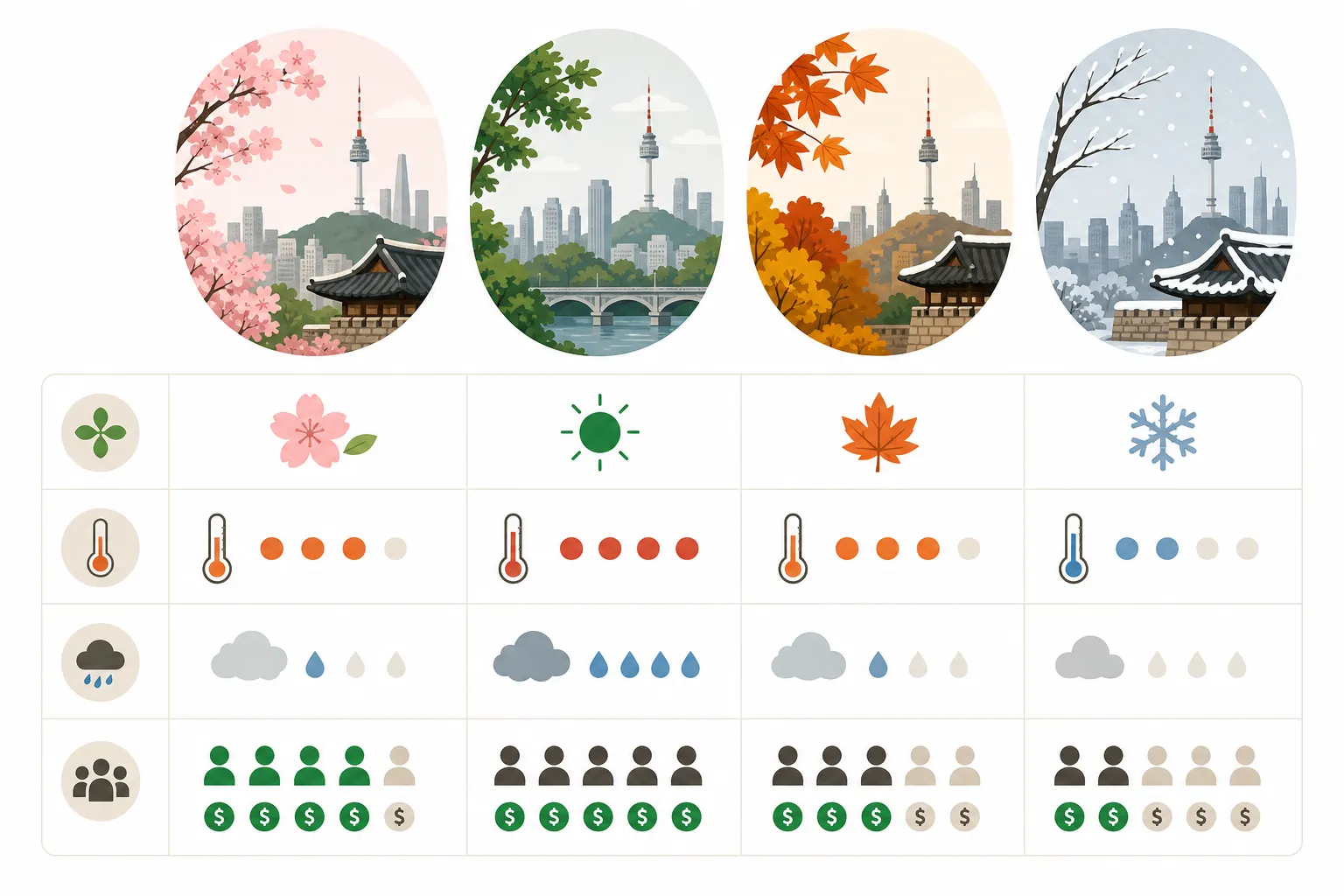
| Season | Avg. daytime high | Rainfall level | Crowd/price level |
|---|---|---|---|
| Autumn (late Sep–early Nov) | 15–22°C | Low | High in early Oct (Chuseok), moderate otherwise |
| Spring (early Apr–mid-May) | 12–22°C | Low-moderate | Peak during blossom week |
| Winter (Dec–Feb) | 3°C average, ranges by year | Lowest of the year | Lowest, except Seollal week |
| Summer (late Jun–Aug) | 26–31°C | Highest (monsoon) | Moderate, spikes in August holiday week |
Seoul's weather swings hard between seasons, and the right window depends on what you actually want from the trip — blossoms, foliage, festival crowds, or lower prices. Once you've settled on a season, the harder part is often getting into specific restaurants or timing palace visits around holiday closures, which is where local booking help saves the most time.
Tell KOncierge your travel dates and priorities, and get a Seoul itinerary and booking support built around the season you've chosen.
Ask KOnciergeFrequently asked questions
What is the cheapest month to visit Seoul?
January and February typically bring the lowest flight and hotel prices, aside from the week around Seollal (Lunar New Year). When domestic travel and some business closures push prices and crowds up temporarily. Outside that week, winter's low tourist volume generally means better rates than spring or autumn.
Is it better to visit Seoul in spring or autumn?
Both are comparably mild and dry, so it comes down to what you want to see. Spring (early April to mid-May) gives you cherry blossoms but the heaviest crowds and highest hotel rates of the shoulder seasons. Autumn, especially October, tends to have more consistently clear skies and slightly lower crowd pressure outside the Chuseok holiday week.
What's the biggest mistake travelers make when picking dates for Seoul?
Assuming summer is a safe default because it's warm. Seoul's summer includes a multi-week monsoon stretch (jangma) with heavy, sustained rain, plus high humidity that makes walking-heavy sightseeing uncomfortable. Travelers who book August dates without checking for the rainy season often end up rerouting entire itineraries around downpours.
How cold does Seoul get in winter?
January averages around 3°C during the day and can drop to roughly -7°C at night, though this varies noticeably by year — some winters stay mild with little frost, others bring sustained hard cold. January is also the driest month of the year, so the cold tends to come with clear skies rather than snow on most days.
Do I need to plan my trip around Korean holidays?
Only if your dates overlap Chuseok or Seollal, Korea's two major domestic travel holidays, when trains, popular restaurants, and some attractions run reduced hours or close entirely. Outside those windows, Seoul doesn't have a season where sightseeing shuts down — for holiday-proofing a specific trip, the Seoul Itinerary: 3 Days for First-Time Visitors guide walks through how to structure around them.
Is Seoul weather different from the rest of South Korea?
Seasonally it follows the same pattern as most of the country, but Seoul's dense urban core runs a few degrees warmer than surrounding rural areas, especially on summer evenings. Due to the urban heat island effect. If you're combining Seoul with a coastal stop, see the Busan Itinerary: 2 Days Covering the Coast, Temple, and Old Town for how conditions differ there.
Sources
- Seoul Temperature by Month: 3–31°C - Weather & Climate — weather-and-climate.com
- Seoul Weather by Month – Climate & Best Time to Visit — weather-and-climate.com
- Seoul climate: seasons, when to go, monthly averages — climatestotravel.com
- Seoul Climate, Weather By Month, Average Temperature (South Korea) - Weather Spark — weatherspark.com
- Seoul climate: Weather Seoul & temperature by month — en.climate-data.org
How was this article?