
Best Time of Year to Visit South Korea: A Month-by-Month Ranking
Autumn (late Sep-early Nov) ranks highest for clear skies and 10-20°C days; see how spring blossoms, summer monsoon, and winter compare before you book.
Late September to early November is the best time to visit South Korea: clear skies, autumn foliage, and cool 10-20°C days coincide with the fewest weather disruptions. Early April, timed to cherry blossoms, ranks a close second but comes with tighter hotel availability. Both beat humid July and sub-zero January, which suit only travelers with a specific reason to go then.
How we chose these
This ranking scores each period on temperature comfort for walking-heavy sightseeing, rain or typhoon risk, cost and crowding (hotel rates, flights, festival bookouts), and what you actually get to see. Ski season and Lunar New Year closures are noted but not ranked as top picks, since they suit a narrower trip. Peak heat and monsoon weeks rank low deliberately, not omitted, because many travelers only have those dates free and deserve an honest read.
- 1
Late September to Early November (Autumn)
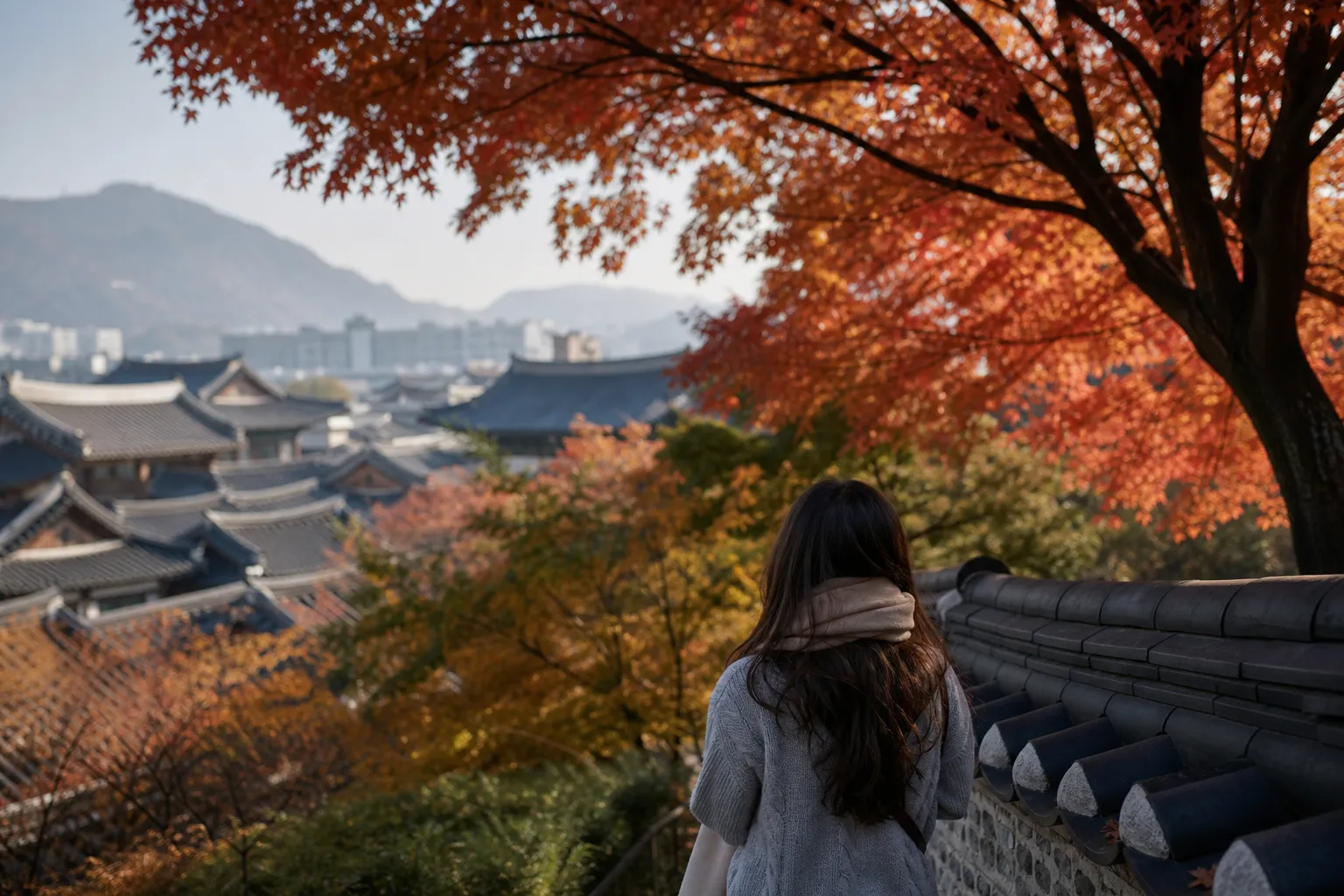
The autumn stretch from mid-September through the first half of November, when summer humidity breaks and foliage turns across the country's mountains and palace grounds.
Daytime temperatures typically run 10-20°C with low rainfall and consistently clear skies, making this the most comfortable window for walking tours, hiking (Seoraksan, Bukhansan), and outdoor palace visits. Foliage generally peaks late October to early November depending on region and elevation.
- Cost
- 20-40% above winter off-peak rates, similar to spring
- Hours
- N/A — seasonal window, not a single site
- Getting there
- N/A — applies nationwide; Seoul's core sights remain reachable via subway lines 1-9
- Booking
- Book flights and hotels 2-3 months ahead for early-to-mid October, which overlaps with Chuseok (Korean Thanksgiving) travel and domestic demand.
- 2
Late March to Mid-April (Cherry Blossom Spring)
The cherry blossom season, when flowering trees bloom in a wave moving from Jeju northward to Seoul and Incheon over roughly two to three weeks.
For 2026, forecasters put first bloom around March 22-25 in Jeju and Busan, reaching Seoul by April 3-4, with full bloom about a week later.
- Cost
- Peak-season hotel and flight pricing in Seoul and Jeju during bloom weeks
- Hours
- N/A — seasonal window
- Getting there
- Yeouido and Jinhae are the two most-cited viewing areas; Yeouido is reachable via Yeouinaru Station (Line 5)
- Booking
- Bloom forecasts vary between sources by up to three days, so build in flexibility rather than booking around one exact date.
- 3
May to Early June (Late Spring)
The post-blossom, pre-monsoon window when parks are green, festivals ramp up, and cherry blossom crowds have thinned.
Temperatures generally sit in the mild 15-24°C range with lower rainfall than midsummer, making it a strong stretch for the same walking and hiking itineraries as autumn, without needing to chase a bloom forecast. Hotel rates typically ease slightly from the April peak.
- Cost
- Moderate — below peak cherry-blossom and autumn-foliage pricing
- Hours
- N/A — seasonal window
- Getting there
- N/A — nationwide
- 4
December to February (Winter)
The cold season, with average temperatures often below freezing in Seoul and the north, and ski resorts (Yongpyong, Vivaldi Park) in operation.
This is the cheapest time to fly into Korea and book hotels, and it is the right call if skiing, ice festivals, or winter markets are the point of the trip. It ranks lower here for general sightseeing because outdoor walking days get shorter and colder, and some outdoor attractions reduce hours.
- Cost
- Lowest hotel and flight pricing of the year, outside Lunar New Year week
- Hours
- N/A — seasonal window
- Getting there
- N/A — nationwide
- Booking
- Lunar New Year (dates shift yearly) closes many small restaurants and some attractions for several days — check exact dates before booking that week.
- 5
Late June to August (Summer / Monsoon)
The hot, humid season including the jangma monsoon stretch, typically concentrated from late June into July, followed by peak heat in August.
Humidity and heat (regularly 27-33°C with high humidity) make midday walking tours uncomfortable, and monsoon rain can disrupt outdoor plans with little warning. It ranks last here because weather risk and discomfort are higher than any other window, though it is also peak domestic beach season (Busan, Jeju) if that's the goal.
- Cost
- Moderate-to-high around early August due to domestic vacation demand
- Hours
- N/A — seasonal window
- Getting there
- N/A — nationwide
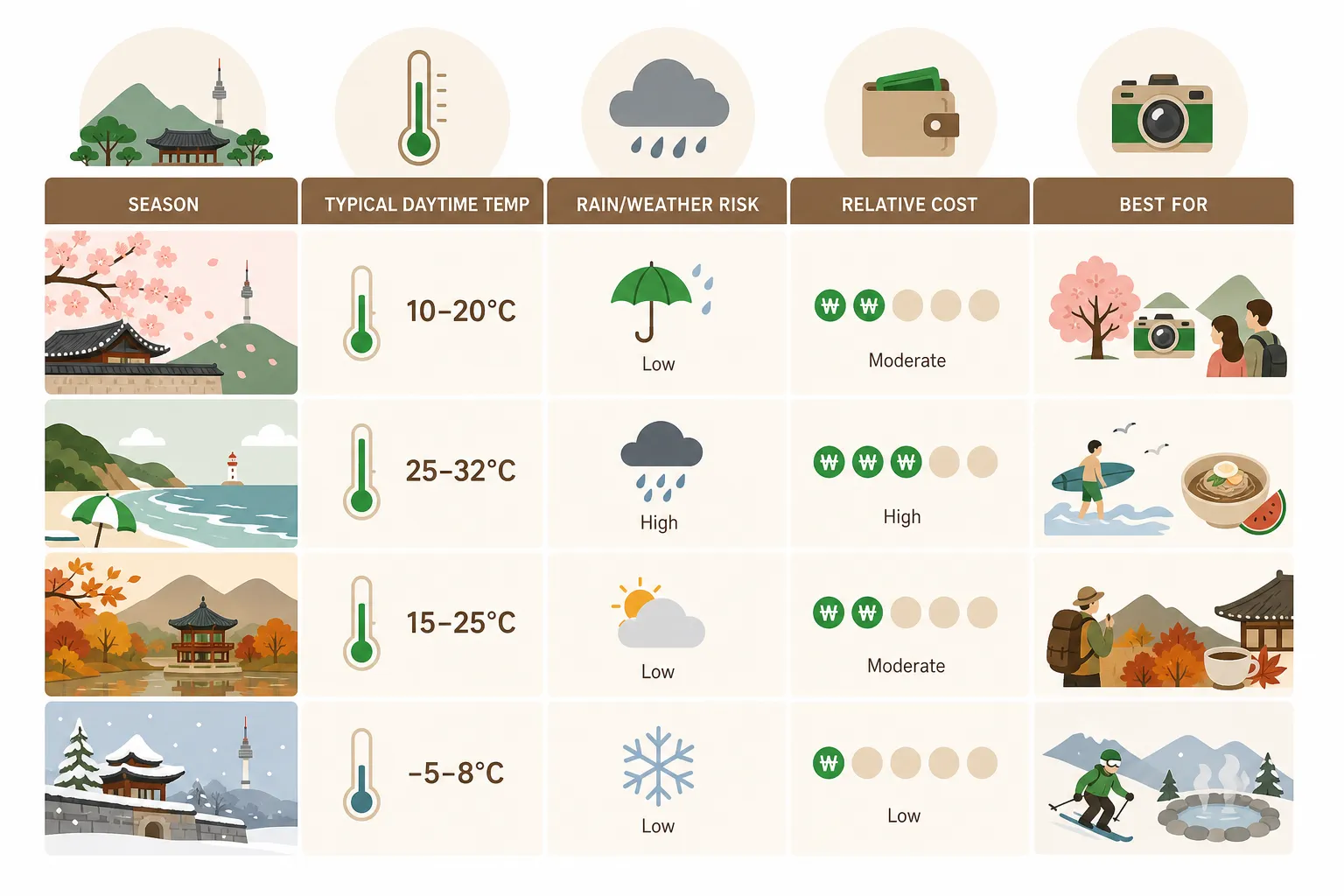
Compare at a glance
| Season | Typical daytime temp | Rain/weather risk | Relative cost | Best for |
|---|---|---|---|---|
| Autumn (late Sep-early Nov) | 10-20°C | Low | Mid-to-high | Hiking, foliage, general sightseeing |
| Cherry blossom (late Mar-mid Apr) | 10-18°C | Low-moderate | High | Blossom viewing, first-time photo trips |
| Late spring (May-early Jun) | 15-24°C | Low-moderate | Moderate | Festivals, walking itineraries without crowds |
| Winter (Dec-Feb) | Below 0-10°C | Low (snow possible) | Lowest | Skiing, winter markets, budget trips |
| Summer (late Jun-Aug) | 27-33°C | High (monsoon, humidity) | Moderate-high | Beach trips, festivals tolerant of heat |
Peak weeks (early-to-mid April blossoms, October foliage, Chuseok) sell out hotels and popular restaurant reservations well in advance, and several sought-after spots only take bookings through Korean-language platforms. A local concierge closes that gap so a good season choice doesn't get undone by a fully-booked itinerary.
Let KOncierge's bilingual assistant time your trip to the right season and lock in hotels, restaurants, and local guides before peak weeks fill up.
Ask KOnciergeFrequently asked questions
What is the cheapest time of year to visit South Korea?
December through February, outside Lunar New Year week, generally has the lowest flight and hotel prices, since it falls between the autumn foliage and spring blossom peaks. You trade lower cost for shorter daylight and cold temperatures, often below freezing in Seoul.
What is the most common mistake people make when timing a Korea trip?
Booking a fixed date around a single cherry blossom forecast. Bloom timing shifts every year with weather and even official sources differ by several days — the 2026 Korea Tourism Organization forecast and other trackers list different dates for the same cities. Build a few days of flexibility into the trip instead of anchoring to one date.
Is autumn or spring better for a first trip to Korea?
Autumn (late September to early November) is the steadier choice: reliably clear skies, comfortable 10-20°C days, and foliage that peaks over a longer window than cherry blossoms do. Spring blossoms are a stronger draw visually but bloom for a shorter, less predictable stretch and coincide with a higher-demand travel period.
Do I need a visa or K-ETA to visit South Korea in 2026?
Travelers from countries already on the K-ETA exempt list do not need to apply, since the K-ETA exemption has been extended through December 31. 2026. You can still apply for a K-ETA voluntarily, which exempts you from filling out a paper arrival card on landing. Check your specific nationality's status before booking, since the exemption applies only to countries already on that list.
When is monsoon season in Korea and should I avoid it?
The jangma monsoon typically concentrates in late June through July, bringing heavy, sometimes sudden rain on top of already high humidity. It is not a reason to cancel a trip, but it is the least predictable weather window of the year for outdoor-heavy itineraries, which is why it ranks last on this list rather than being left off entirely.
What should I pack differently depending on when I visit?
For autumn and spring, layer for a 10-20°C swing between morning and afternoon. For summer, plan for humidity and pack light, quick-dry clothing plus a compact umbrella for sudden monsoon rain. For winter, Seoul's wind chill is sharper than the raw temperature suggests, so a proper coat matters more than layering alone.
Sources
- ※ Notice of Exemption of K-ETA Temporary Period | Consulate of the Republic of Korea in Hagatna — mofa.go.kr
- South Korea Extends K-ETA Exemption Until End of 2026 - Passe/Port — discover.passportindex.org
- South Korea – Extension of Temporary K-ETA Exemption for Eligible Nationals (KPMG GMS Flash Alert) — kpmg.com
- South Korea: 'Visit Korea Year' Temporarily Exempts 22 Countries from K-ETA | Fragomen — fragomen.com
- 2026 Cherry Blossom Forecast - VISITKOREA (Korea Tourism Organization) — english.visitkorea.or.kr
- 2026 nationwide cherry blossom forecast for South Korea | Stripes Korea — korea.stripes.com
How was this article?