
Best Time to Visit Korea: A Season-by-Season Breakdown
When to visit Korea for weather, cherry blossoms, and fall foliage. A season-by-season breakdown of temperatures, crowds, and costs to plan your trip.
Late September to early November is the best overall time to visit Korea: skies are clear, temperatures sit in the mild teens to low 20s (Celsius), and the fall foliage forecast shows peak color moving from Seoraksan in mid-to-late October down to Seoul in early November. Spring (late March to mid-April) is a close second for cherry blossoms, but it's shorter and books up faster.
How we chose these
Seasons were ranked by three factors: weather comfort (temperature and rainfall you'll actually feel outdoors), whether a signature natural event lines up with your dates (blossoms, foliage, snow), and crowd/price pressure at the country's most-visited sites. A season was disqualified from a top ranking only for genuine discomfort, not for being less scenic — summer is included because millions of people do visit then, but it's flagged honestly for heat, humidity, and monsoon rain.
- 1
Fall (late September–November)
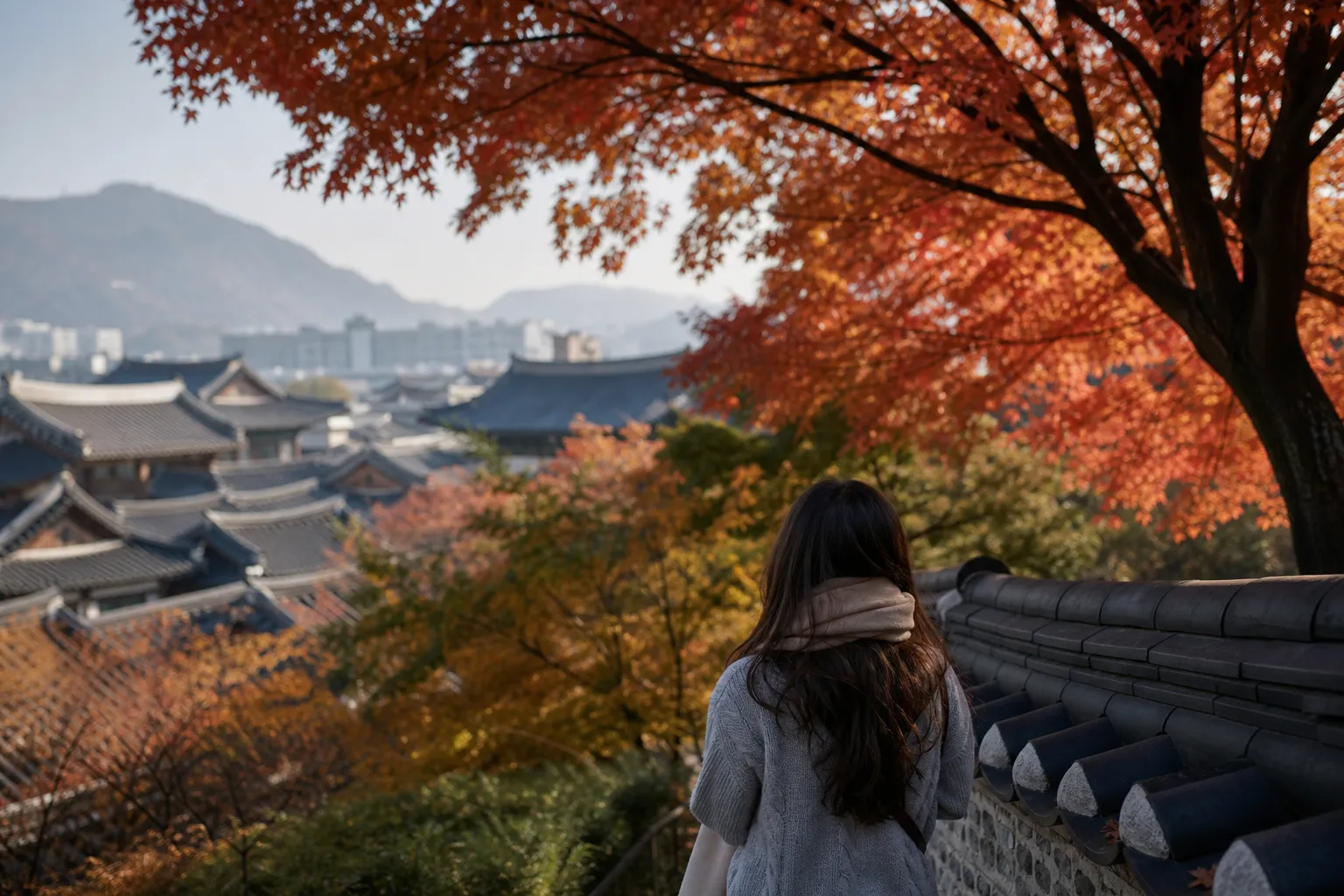
The autumn foliage season, when maple and ginkgo color sweeps the country from the northeastern mountains down to the southern coast and Seoul.
Comfortable daytime temperatures (roughly 10-20°C), low humidity, and minimal rain make this the most walkable season for palace visits, hiking, and street food. The fall foliage forecast shows Seoraksan coloring first from late September with peak mid-to-late October, while Seoul and southern regions like Naejangsan
- Cost
- No season surcharge itself, but hotel rates in Seoul and near Seoraksan rise 15-30%
- Hours
- Daylight hiking hours shorten toward November; most national parks close trail entry by mid-afternoon in late fall
- Getting there
- Seoraksan National Park is reached via intercity bus from Seoul's Dong-Seoul Bus Terminal, roughly 2-2.5 hours
- Booking
- Book Seoraksan-area accommodation and express buses at least 3-4 weeks ahead for peak color weekends; a Korea travel concierge like KOncierge can also arrange this for you if dates keep shifting with
- 2
Spring (late March–mid-April)
Cherry blossom season, when flowering trees bloom in a south-to-north wave across the peninsula.
This is the shortest true peak window of the year — typically 10-14 days per region — which makes it dramatic but risky to plan around a fixed date. The cherry blossom forecast shows Jeju and Busan blooming around late March, central regions late March to early April, and Seoul/Gyeonggi in the early-to-mid April
- Cost
- Flights and hotels in Seoul during the first two weeks of April typically run higher than
- Hours
- Major blossom spots like Yeouido's Yunjungno are open-access streets, not ticketed sites, so no fixed hours apply
- Getting there
- Yeouido (Seoul's main cherry blossom strip) is reached via Yeouinaru Station (Seoul Subway Line 5), a short walk to the riverside path
- Booking
- If your dates are fixed months in advance, treat the forecast as a guide, not a guarantee — bloom timing shifts year to year with spring temperatures.
- 3
Winter (December–February)
Korea's cold, dry season, running from early snowfall in December through the coldest stretch in January and lingering chill into February.
Winter suits a specific traveler: skiers heading to resorts like those near Pyeongchang, and anyone drawn to snow festivals and quieter palace visits without spring or fall crowds. Seoul's winter climate is cold and dry, with January averaging around -2°C, so layered clothing and heated indoor breaks matter more than umbrella planning.
- Cost
- Ski resort lift passes and gear rental add a meaningful line item most other seasons
- Hours
- Daylight is shortest of the year, with sunset around 5:30pm in December-January, shortening outdoor sightseeing windows
- Getting there
- Major ski resorts are reached by shuttle bus or KTX plus transfer from Seoul; check individual resort shuttle schedules, which change seasonally
- 4
Summer (June–August)
Korea's hot, humid season, including the monsoon rains (jangma) that typically arrive from mid-June through late July.
August is the hottest month, averaging around 25-26°C in Seoul per Seoul's climate data, but that average hides frequent 30°C+ days with high humidity, plus monsoon downpours that can disrupt outdoor plans for days at a stretch.
- Cost
- Domestic beach destinations (Busan, Jeju) see summer price spikes for accommodation,
- Hours
- Extended evening hours are common at night markets and river parks to avoid daytime heat
- Getting there
- Busan is reached via KTX from Seoul Station in about 2.5 hours
Compare at a glance
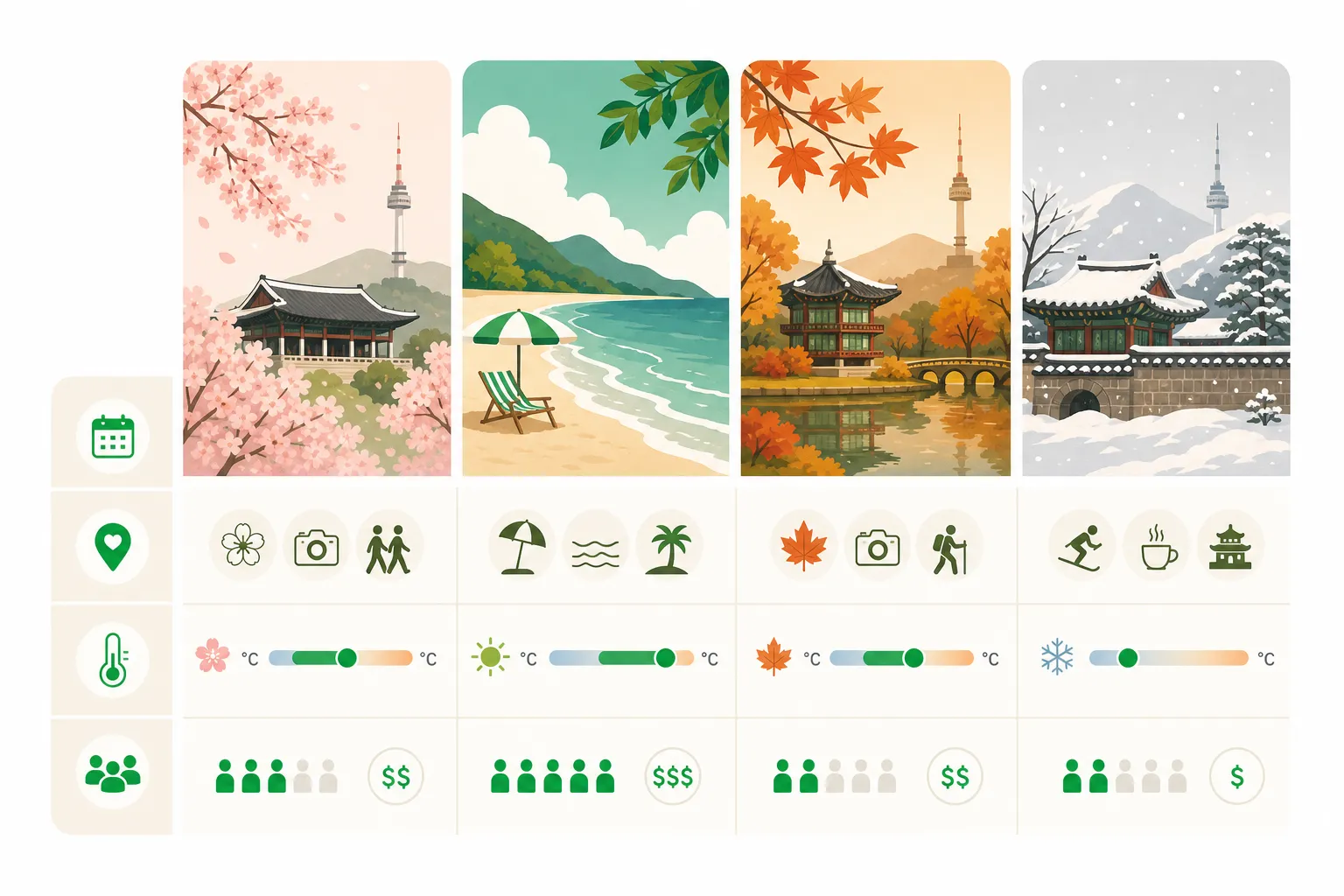
| Season | Best for | Typical temp range | Crowd/price level |
|---|---|---|---|
| Fall (late Sep-Nov) | Foliage, hiking, comfortable sightseeing | 10-20°C | High during peak foliage weekends |
| Spring (late Mar-mid Apr) | Cherry blossoms, mild walking weather | 8-18°C | High during peak bloom, spikes fast |
| Winter (Dec-Feb) | Skiing, snow festivals, low crowds | -5 to 5°C (Jan avg. around -2°C) | Lower, except ski resorts |
| Summer (Jun-Aug) | Indoor culture, beach towns, festivals | 23-30°C+ with high humidity | High at beach destinations only |
Even once you've picked a season, the logistics that make or break a Korea trip — entry authorization status, regional festival timing, and booking restaurants or shows that don't take English reservations — are easy to get wrong from outside the country.
Talk to KOncierge about building a season-specific Korea itinerary
Ask KOnciergeBy passport
- General (visa-waiver nationals)
- K-ETA requirements and exemptions vary by country and change over time; always verify current status on the official K-ETA portal before booking, regardless of which season you're traveling in.
Frequently asked questions
What is the single best month to visit Korea?
October is the most commonly recommended month: temperatures are mild, humidity drops, and fall foliage typically peaks mid-to-late October in mountain regions like Seoraksan, spreading to Seoul by early November. It also avoids both summer monsoon rain and winter cold.
Is spring or fall better for visiting Korea?
Both offer comfortable weather, but fall has a longer usable window — roughly six weeks of shifting foliage color versus 10-14 days of peak cherry blossom in any one region. If your dates are fixed far in advance, fall gives more flexibility to still catch good color somewhere in the country.
How much does a trip to Korea cost depending on season?
Season affects price mainly through hotel demand: expect a 15-30% rate increase in Seoul during peak cherry blossom (early April) or peak foliage (mid-to-late October) weekends, and similar spikes at beach destinations like Busan and Jeju during Korean summer school holidays (late July-August). Winter ski resorts add lift-pass costs of roughly ₩70,000-100,000 (~$50-70) per day on top of accommodation.
What is the most common mistake travelers make when timing a Korea trip?
Fixing a single travel date around a forecasted event — like booking exactly one week in early April for cherry blossoms — without building in flexibility. Bloom and foliage timing shift year to year with temperature, so the safer approach is picking a 2-3 week window and checking the current-year forecast closer to departure.
Do I need a K-ETA to visit Korea?
It depends on your nationality and current exemption status, which changes independently of season. Under the Visit Korea Year initiative, nationals of roughly 22 countries are temporarily exempt from filing a K-ETA, with the exemption reportedly extended through the end of 2026, but you should confirm your specific country's status on the official K-ETA portal before booking.
Is summer a bad time to visit Korea?
Summer isn't unworkable, but it requires planning around heat, humidity, and monsoon rain that typically arrives mid-June through late July. August averages around 25-26°C in Seoul, but daily highs often exceed 30°C with high humidity. It suits travelers prioritizing indoor markets, museums, and beach towns like Busan over hiking-heavy itineraries.
Sources
- K-ETA Official Portal (Korea Immigration Service) — k-eta.go.kr
- South Korea: Visit Korea Year Temporarily Exempts 22 Countries From K-ETA (Fragomen) — fragomen.com
- KPMG GMS Flash Alert 2026-024 — kpmg.com
- 2025 Cherry Blossom Forecast (VisitKorea / Korea Tourism Organization) — english.visitkorea.or.kr
- 2025 Fall Foliage Forecast (VisitKorea / Korea Tourism Organization) — english.visitkorea.or.kr
- Climate of Seoul (Wikipedia) — en.wikipedia.org
How was this article?
