
How to Use the Seoul Subway as a Foreigner: Cards, Fares and Paying
Which card to get, where a card from home works, and the rules that catch visitors. Fares checked in November 2026.
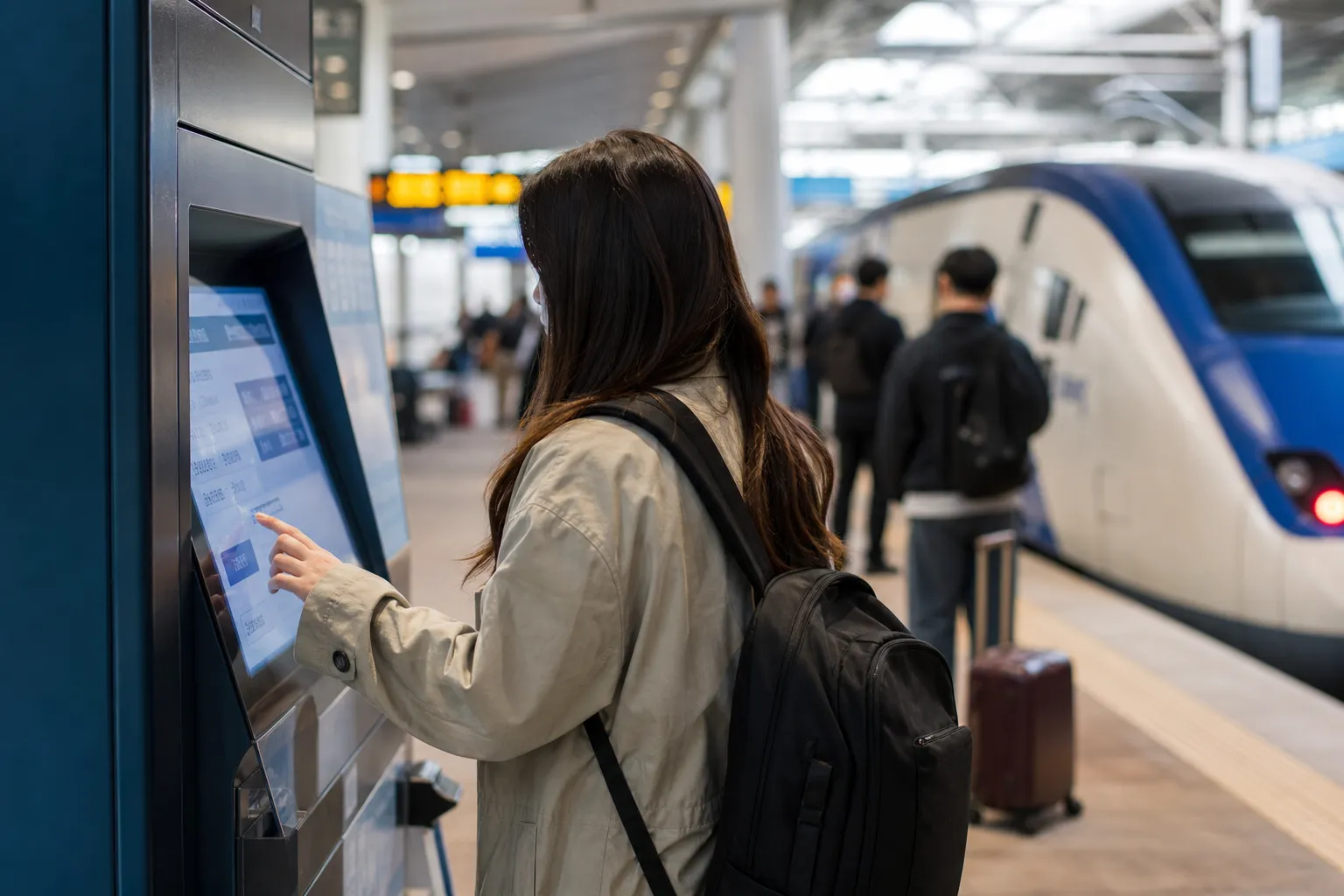
You can't tap a card from home at the Seoul subway gates. You need a Korean transit card or a ticket. For most visitors that means one of two things. Pick up a T-money card at a convenience store and top it up with cash, or buy a Climate Card pass with your own card at the new ticket machines in Seoul Metro stations (most of Lines 1–8 inside Seoul). A ride of up to 10 km costs ₩1,550 with a card, or ₩1,650 plus a ₩500 deposit with a single-journey ticket.
Fares and payment rules checked on the websites of the Seoul city government, Seoul Metro, Line 9 and T-money on 17–18 November 2026. We didn't buy a ticket with a foreign card for this guide.
Which card should you get?
Your trip | Get | Why |
|---|---|---|
Staying in Seoul and riding 3 or more times a day (2 or more on a pass of 3 days or longer) | Climate Card short-term pass | Unlimited Seoul subway and Seoul city buses: 1 day ₩5,000, 3 days ₩10,000, 7 days ₩20,000, plus ₩3,000 for the card |
Leaving Seoul (Busan, Incheon, Suwon), or riding a few times a day | T-money | Works on subways, buses and many taxis across Korea; pay per ride |
Just one or two rides | Single-journey ticket | No card to buy; ₩500 deposit back at the end |
Three trips on T-money cost at least ₩4,650, so a one-day Climate Card (₩5,000) starts paying off on the fourth separate trip. The 3-day pass breaks even at about 7 trips, the 7-day pass at about 13. Add ₩3,000 for the card itself.
Can you pay with a card from home?
Not at the gate. But since 17 March 2026, the new ticket machines in Seoul Metro stations have taken cards issued abroad.
Where | Card from abroad? | What you can buy |
|---|---|---|
Ticket gates | No | Tap a transit card or ticket |
New ticket machines in Seoul Metro stations (Lines 1–8) | Yes: Visa, Mastercard, JCB, UnionPay, and Amex since 1 October | Single-journey tickets, a Climate Card, Climate Card passes |
Line 9, Ui-Sinseol and Sillim Line stations, Korail-run stations, and the Line 4 Jinjeop, Line 7 Bucheon and Line 8 Byeollae sections | Not part of the change | Use a Seoul Metro station, or cash |
The city says paying with a card from abroad adds a service fee of about 3.7% on average. Your own bank may add its foreign-transaction fee on top. Reports from the new machines say the screens can be switched to English, Japanese or Chinese.
Topping up a regular T-money card at the station machines is cash only. If you go the T-money route, carry some won in notes. Top-ups go in ₩1,000 steps.
Climate Card: the rules that catch visitors
The Climate Card is Seoul's unlimited pass. Visitors can buy the short-term version for 1, 2, 3, 5 or 7 days, priced from ₩5,000 to ₩20,000. Buy the card at a new ticket machine in a Seoul Metro station, or at a convenience store near Line 9 stations. Get the physical card. There's no Climate Card for iPhone, and the Android version needs a Korean phone number.
The pass starts the day you charge it. You can't load it in advance. A one-day pass runs until the last train that night, not for 24 hours.
Seoul only. It doesn't cover the Shinbundang Line, GTX, subway stations outside Seoul, airport buses or taxis. Get off outside Seoul and staff will charge you the fare for that trip.
Not from the airport. At Incheon Airport stations you can get off with it but not get on. See our guide to getting from Incheon Airport to Seoul.
One card per person, and tap out when you leave the station.
Refunds are limited. You can get one only while the pass is still valid, and only for what you haven't used: the pass price minus the fares you've ridden and a ₩500 fee. Register the card on the T-money website first. Without a Korean bank account, the refund is paid in cash at T-money's head office.
The 30-day Climate Card ended on 1 October 2026. Ignore older guides that recommend it.
T-money
T-money is the rechargeable transit card used across Korea. The same card works on buses and subways in Busan and other cities, and in many taxis. GS25, CU, 7-Eleven and other convenience stores sell it for ₩3,000–5,000. The Tmoney Travel Card for visitors is ₩4,000, and WOWPASS (₩6,000) is a T-money card that doubles as a prepaid payment card. You don't need to register it unless you want the child or youth fare.
Top it up with cash. Station machines don't take cards for T-money top-ups, and T-money's guide for visitors says to pay in cash. You can add ₩1,000 to ₩90,000 at a time, at station machines or convenience stores.
The same card pays for Seoul city buses (blue and green), which cost ₩1,500 with a card. Tap out when you get off the bus as well. Skip it and you lose the transfer discount on your next bus or train.
Kids and teens pay less on the subway (₩550 for ages 6–12, ₩900 for 13–18), but only once the card is registered with their date of birth at a convenience store.
Convenience stores refund a leftover balance of up to ₩20,000–30,000, depending on the chain, for a ₩500 fee. For larger balances, go to Tmoney Town near Seoul Station Exit 10. The card price isn't refunded.
iPhone users have one more option. The MobileTmoney app has a mode for international users: choose "Foreigner" when you open it, no sign-up needed, and top up inside the app with Apple Pay using Mastercard, American Express, UnionPay or JCB. Visa isn't on the list. Then tap your iPhone at the gate. On Android, use a physical card. We couldn't confirm a mobile T-money option for visitors.
Single-journey tickets
At the ticket machine, switch the screen to English if you need to, choose a single-journey ticket and pick your destination station. You pay the fare plus a ₩500 deposit. When you arrive, put the card in the deposit refund machine and the ₩500 comes back. It doesn't have to be the same day. You can't use a single-journey ticket to transfer to a bus.
Gates, transfers and exits
Tap in on the gate reader, and tap out again on the way out. The fare depends on distance: ₩1,550 for the first 10 km, then ₩100 more for every 5 km up to 50 km, and every 8 km after that.
Changing lines inside the gates doesn't count as a new trip. You pay by the total distance. Go out through the gate and come back in, and it's a new trip. The one exception is a mistaken exit: re-enter at the same station within 15 minutes with the same card and you won't pay the base fare again.
Switching between subway and bus works much the same way. Do it with a transit card within 30 minutes of tapping out (60 minutes from 21:00 to 07:00), and the whole journey is priced as one, with one base fare for the first 10 km and then distance charges. Up to five rides in a row count.
Use exit numbers. Stations have numbered exits, and directions in Seoul are usually given as "Exit 3 of Myeongdong Station".
Apps and last trains
Naver Map and KakaoMap both have English and give subway directions, including where to change lines. Google Maps shows subway routes in Korea, but its walking and driving directions have been limited.
Last trains leave between about midnight and 1 am on weekdays, and around midnight on weekends and public holidays. Times differ by station and direction, so check your route in the app before a late night out. After that, it's a night bus or a taxi; our taxi app guide covers the apps that work without a Korean number.
FAQ
What's the Line 9 express?
Line 9 runs express trains that stop at 16 stations, including Gimpo Airport, Yeouido, Express Bus Terminal and Sports Complex. The fare is the same as the local train. In rush hour the express is very crowded. Avoid it if you have big luggage.
Can I bring big luggage or an e-scooter?
Seoul Metro's rules for Lines 1–8 bar items of 158 cm or more in total dimensions, or over 32 kg. Most standard suitcases are under this. Since 1 July 2026, battery-powered scooters and other personal mobility devices (mobility aids excepted), and lithium batteries over 160 Wh, aren't allowed in stations or on trains.
I left something on the train. What now?
Tell station staff, or call Seoul Metro on 1577-1234. Items go to lost and found centers by line, open weekdays 09:00–18:00 (Line 9 has its own). If you'd rather not handle it in Korean, a 1-Day Pass (₩9,900) gets you a concierge on WhatsApp or LINE for the day, and we can help you contact the station or lost and found.
Sources
Seoul Metropolitan Government: subway fares, transfer discounts, Climate Card short-term pass and FAQ
Seoul Metro: fares, terms of carriage, single-journey tickets, lost and found, press releases on foreign card payments
T-money: Foreigner Guide, Tmoney Travel Card, card refunds, MobileTmoney app listing
Seoul Metro Line 9: express stations
How was this article?