
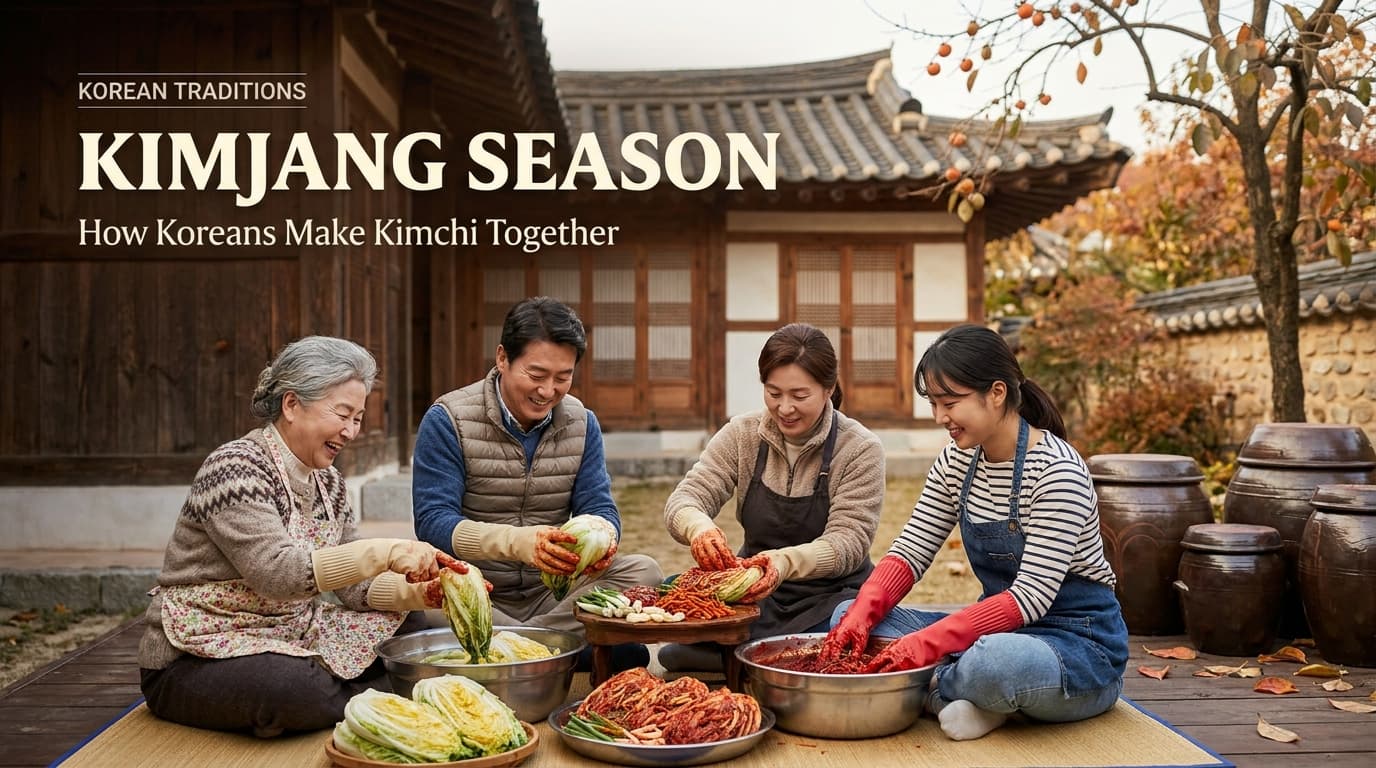
Kimjang Season: How Koreans Make Kimchi Together
Every November, Koreans gather to make kimchi for the winter. Learn what kimjang is, how kimchi is made step by step, and how travelers can join in.
Every year in late autumn, something special happens in homes across Korea. Families, neighbors and friends gather around huge bowls of salted cabbage, roll up their sleeves, and make enough kimchi to last through the winter.
This tradition is called kimjang (김장), and it is one of the most meaningful parts of Korean culture. If you are visiting Korea in November or December, here is everything you need to know about kimjang season.
What Is Kimjang?
Kimjang is the tradition of making and sharing large amounts of kimchi in late autumn to prepare for winter.
Long before refrigerators existed, fresh vegetables were hard to find during Korea's cold winters. Families made kimchi in large batches so they could eat vegetables all winter long. Many households still make dozens, or even hundreds, of heads of cabbage at once.
But kimjang is about more than food. It is a day when people come together, share the work, and share the kimchi with family, neighbors and people in need.
In 2013, "Kimjang, making and sharing kimchi in the Republic of Korea" was added to UNESCO's Representative List of the Intangible Cultural Heritage of Humanity.
When Is Kimjang Season?
Kimjang usually takes place from late November to early December, when the weather gets cold enough to keep kimchi fresh while it ferments.
The exact timing depends on the region. Northern areas start earlier because winter comes sooner, while southern areas make kimchi later. Korea's weather service even announces a "kimjang forecast" with the best timing for each region.
How Is Kimchi Made? The Kimjang Process
Kimjang is usually a two-day job. Here is how it works.
Step 1. Salting the cabbage
Napa cabbages are cut in half and soaked in salt water, or sprinkled with coarse salt, then left for several hours or overnight. This softens the leaves and helps the kimchi keep longer.
Step 2. Rinsing and draining
The salted cabbage is rinsed several times in cold water and left to drain.
Step 3. Making the seasoning paste
While the cabbage drains, the seasoning is prepared. Every family has its own recipe, but the basic ingredients are:
Gochugaru (Korean red pepper flakes)
Garlic and ginger
Korean radish, cut into thin strips
Green onions
Jeotgal (salted, fermented seafood such as salted shrimp)
Fish sauce
A little sugar or Korean pear for sweetness
Step 4. Spreading the paste
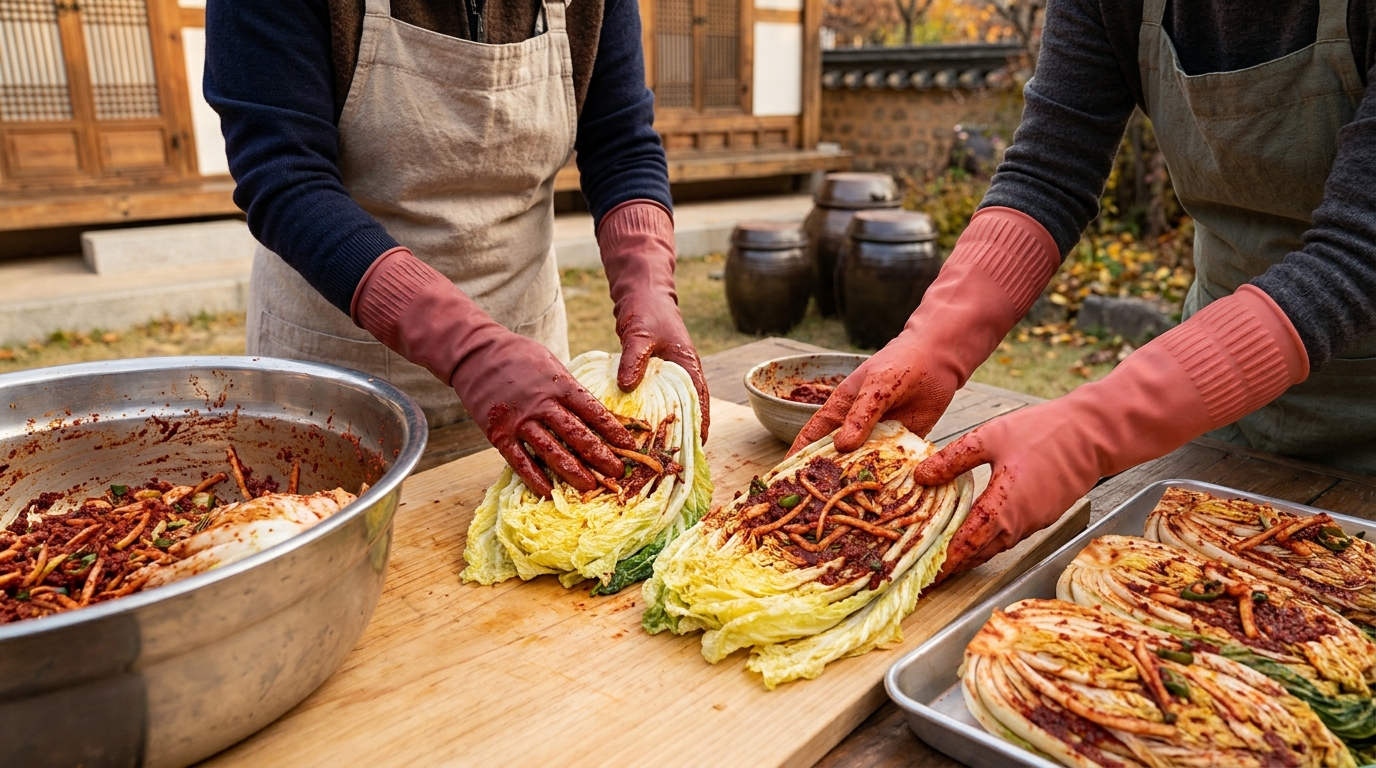
This is the part everyone does together. Wearing rubber gloves, people spread the red paste between every leaf of the cabbage, from the base to the tip.
Step 5. Storing and fermenting
The finished kimchi is packed tightly into containers. Traditionally, Koreans buried kimchi jars (onggi) in the ground to keep them cool in winter. Today, most Korean homes have a special kimchi refrigerator designed just for this.
The Best Part: Bossam and Sharing
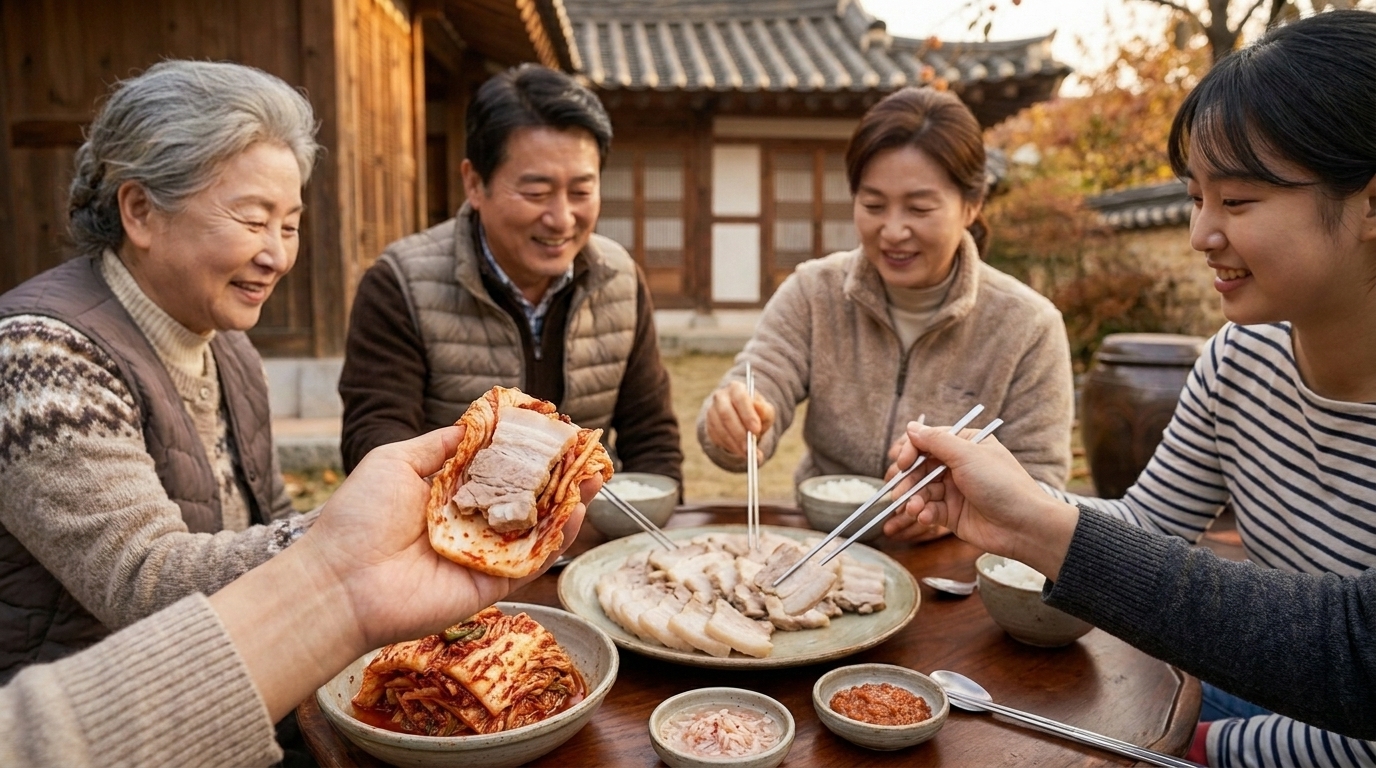
After a long day of work, kimjang ends with a feast. The most famous kimjang meal is bossam: boiled pork slices wrapped in fresh, just-made kimchi and salted cabbage leaves.
Families also send kimchi to relatives, neighbors and friends. In many communities, volunteers make kimchi together and donate it to elderly neighbors and families in need, keeping the spirit of sharing alive.
Kimjang Etiquette: Good to Know If You Join
Wear clothes you don't mind getting stained. Red pepper paste is hard to wash out.
Always wear the gloves you are given. The paste can sting your skin.
Taste as you go. Koreans often feed each other a bite of fresh kimchi wrapped in cabbage, and it is a friendly gesture.
Don't be shy about helping. Kimjang is all about working together.
How to Experience Kimjang as a Traveler
You don't need a Korean family to experience kimjang. Here are some ways to join in:
Kimchi-making classes: Many cooking studios in Seoul offer hands-on kimchi classes for foreigners, where you can make your own kimchi and take it home.
Kimchi museums: Learn about the history of kimchi and see the many regional types.
Traditional markets: Visit a market in late November to see piles of napa cabbage and kimjang ingredients being sold.
Community kimjang events: Local governments and organizations often hold large kimjang events in November, where volunteers make kimchi to donate.
Experience Kimjang with KOncierge
Want to make kimchi like a local? KOncierge offers a kimchi-making experience where you can learn the kimjang process step by step and enjoy your own homemade kimchi.
Have questions about your trip to Korea? With KOncierge, you can ask our local team anything, 24 hours a day.
Kimjang is a reminder that in Korea, food is never just food. It is family, community and sharing. If you are in Korea this winter, don't miss the chance to be part of it.
How was this article?